Stayinto · Boat charter· Americas
Mexico
A woman in Oaxaca City arranges marigolds on a street altar while church bells ring across the zócalo. The flowers are orange as clay, the bells bronze-voiced, the morning cool enough to see your breath.
A woman in Oaxaca City arranges marigolds on a street altar while church bells ring across the zócalo. The flowers are orange as clay, the bells bronze-voiced, the morning cool enough to see your breath.
Mexico stretches from desert to jungle, from the Pacific's rough edge to the Caribbean's clear shallows, and the country changes itself completely every few hundred kilometres. In the north, around Chihuahua and Durango, the land opens into high plateaus where the light is thin and the towns feel carved from the earth itself. Dust moves through the streets in the afternoon. South of there, the Sierra Madre rises as a spine of pine forest and deep canyons, where the air thickens and cools. The central highlands around Mexico City sit at altitude where the sky is often grey and the city itself climbs and descends on itself—a place of stone and water, markets and colonial facades. Moving south toward Oaxaca, the mountains fold into valleys where indigenous languages still shape the morning. The Yucatán Peninsula is altogether different: flat, limestone, covered in low jungle that seems to breathe. The coasts—the Pacific side rocky and dramatic, the Caribbean side calmer, the water a colour between green and blue—frame the whole country like parentheses.
A day in Mexico City begins before dawn with the sound of traffic and vendors setting up in markets. You walk through Coyoacán or Roma, past colonial buildings and street art, and stop for coffee and pan dulce. The museums hold pre-Columbian stone and colonial paintings. By afternoon you are in traffic again, or climbing the stairs of a pyramid on the city's edge. In Oaxaca, the rhythm is slower. The zócalo fills with people at dusk. Restaurants serve mole negro and tlayudas. The light turns gold on the cathedral's stone. In smaller towns—San Cristóbal in Chiapas, Guanajuato in the highlands—the streets are narrow and steep, and you move through them on foot, past churches and colonial houses painted in shades of pink and yellow. On the coasts, the day is about water and heat. In Puerto Escondido, surfers move in and out of the Pacific. In Tulum, the Caribbean is shallow enough to walk out into. Everywhere, there is the smell of wood smoke, corn being ground, chiles being roasted.
Mexico holds you because it does not simplify itself. The country is ancient and modern at once, indigenous and colonial, poor and rich, loud and quiet depending on where you stand and what time you arrive. The food tastes like it has been made the same way for centuries. The people move with a particular kind of grace. The light changes the colour of the stone. You find yourself staying longer than you planned, walking streets you did not know existed, sitting in a café watching the day change. The country does not ask you to understand it all at once. It simply insists that you pay attention.
Pick your week
Area in Mexico
The fleet
The boats
9 boats available · 9 of 9 shown
 Catamaran
Moorings 4200/3 Exclusive Plus
From 4,407 € / week
 Catamaran
Moorings 4600 - 4 Exclusive Plus
From 7,389 € / week
 Catamaran
Moorings 4600 - 4 Exclusive Plus
From 6,611 € / week
 Catamaran
Moorings 4500L/10 Exclusive
From 6,222 € / week
 Catamaran
Moorings 4500L/10 Exclusive
From 6,222 € / week
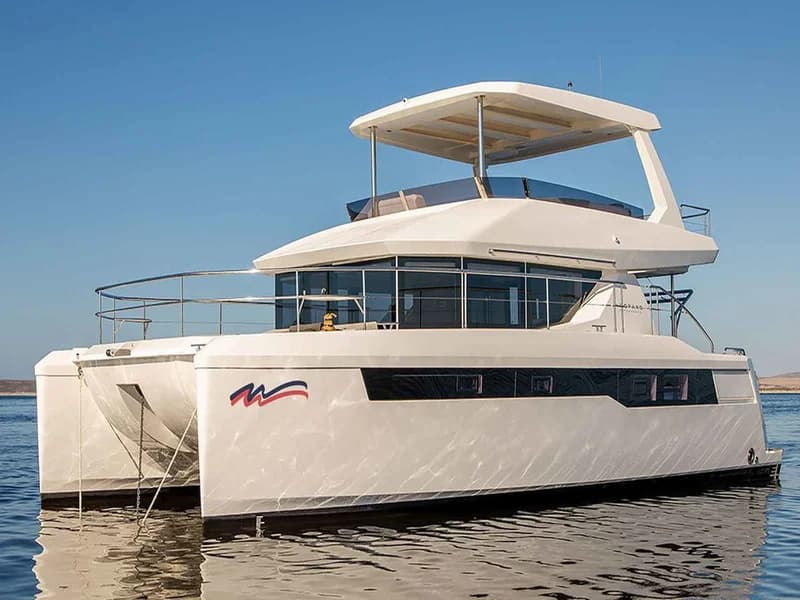 Power catamaran
Moorings 403 PC Exclusive Plus
From 5,185 € / week
 Power catamaran
Moorings 403 PC Exclusive
From 5,185 € / week
 Power catamaran
Moorings 403 PC Exclusive
From 5,185 € / week
 Power catamaran
Moorings 464PC Exclusive
From 7,583 € / week
Ports map
1 departure port in this area
Each marker is a marina where your charter can start.
Ready to board in Mexico?
Set your dates and sailing style. Stayinto Concierge is available 7 days a week to confirm your charter.