Portugal
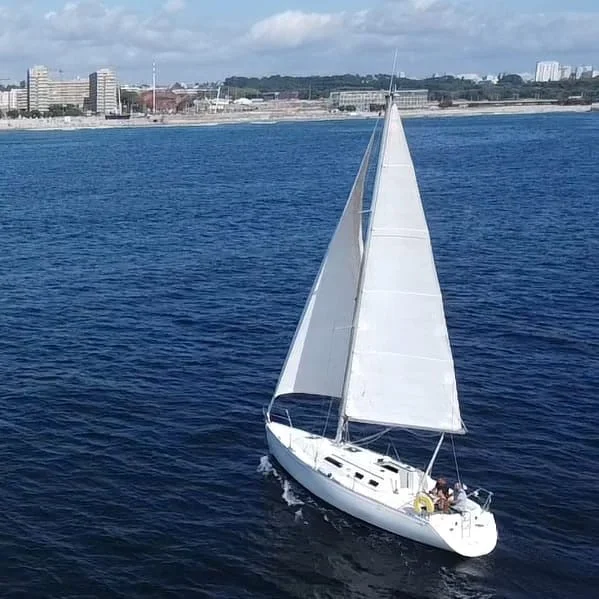
The coast around Matosinhos e Leça da Palmeira runs along the Atlantic edge of northern Portugal, where long lines of surf meet a shoreline that rewards anyone willing to look out to sea. From the water the land feels close yet unhurried, and the Atlantic sets a steady rhythm for every sail. It is the kind of coast one wants to explore slowly, watching the light shift over the water.
Discover Matosinhos e Leça da PalmeiraWhere the Leça river gives up its last brown water to the Atlantic, a white promenade bends north under palms that named the village. Here the Porto coast turns quieter and argues with the sea in its own voice.
Matosinhos and Leça da Palmeira run side by side along the shore, and the day belongs to whoever walks them slowly. In the morning the streets smell of diesel from the fishing boats and of bread from the bakeries that open before the cafés, and the light comes in low off the water, catching the wet pavement and the pale stone of the old fishermen's houses. Men unload crates at the harbour while women in the market halls sort prawns and gilthead on ice, bargaining in short, flat sentences. By midday the cafés fill with families who have come in from the city for lunch, and the grills start: sardines laid across charcoal, the skin blistering, the smoke drifting over the tables and down the lanes. In the late afternoon the shadows lengthen across the avenues, the palms throw long lines over the pavements, and people walk out to the promenade without any particular purpose except to see the sky go orange over the breakwater. Evening is unhurried. The restaurants keep their doors open, the noise of plates and conversation rises and falls, and the streetlights come on one by one along the coast road.
The shore is what makes this place itself. Leça da Palmeira has the mouth of the river, the low sea walls, and the long beaches that stretch toward Porto, where surfers wait in the cold swell and old women sit on folding chairs with their coats buttoned to the neck. Beyond the harbour wall, the Leixões breakwater runs out into open water, a grey line with the lighthouse at the end of it, the Boa Nova light, which has been guiding boats in for generations. Close by, the tea house that Álvaro Siza built on the rocks stands with its white walls and its flat roof, and the waves break against the stone just beneath its windows. A little inland, the municipal pool that Siza also designed sits almost on the sand, its concrete lines softened by the salt air and the sound of water hitting the rocks. In Matosinhos itself the church of Senhor de Matosinhos and its surrounding squares give the town a centre that is older than the port and its industries, and the fish market and the restaurant rows near the harbour keep the working life of the coast in full view.
What stays with you is the way the city keeps its routines without performing them. The fishermen mend nets on the quay while tourists photograph the boats, and nobody seems bothered by either. The tiles on the church walls catch the sun, the gulls fight over scraps near the fish stalls, and the wind comes off the Atlantic every afternoon, bringing the cool that makes the grilled food taste better. You leave with salt in your hair and the promenade still in your legs. The thought that comes back on the train toward Porto is simple: stay another evening, walk the sea wall once more, and watch the lighthouse blink on as the sky darkens over the water.
Cadeia da Relação
Landmark
Historic Centre of Porto
Landmark
4 min on foot
Alminhas da Ponte
Landmark
4 min on foot
Averages 2016-2025
10°
Jan
11°
Feb
12°
Mar
14°
Apr
16°
May
18°
Jun
21°
Jul
20°
Aug
19°
Sep
17°
Oct
13°
Nov
11°
Dec
Jun – Aug
20°
Sea 17°
Dec – Feb
11°
Sea 14°