Historic City of Trogir
Monument
Stayinto · Administrative region
Water comes off the limestone in white terraces, and the spray hangs over the wooden walkways at the Krka falls. Šibenik-Knin is a county where rock and sea keep trading places, and the light changes with each shift.
Inland, the land is dry and open. Around Knin the karst rises in pale, stony fields under a sky that seems wider than the map suggests, and the old fortress above the town holds its position as if the wind still needed watching. Drniš and the country around it has the quiet of farmland kept small: vineyards, olive terraces, stone walls built by hand and left to weather. Then the land drops toward the Krka valley, where the river pools, slows and spreads into lakes before it reaches the sea. Here the mood softens. Trees come down to the water, and the sound of falling water takes over from the wind. Nearer the coast, the air turns salty and the pace quickens, and the limestone gives way to small harbours, boat sheds and the flat blue of the channels.
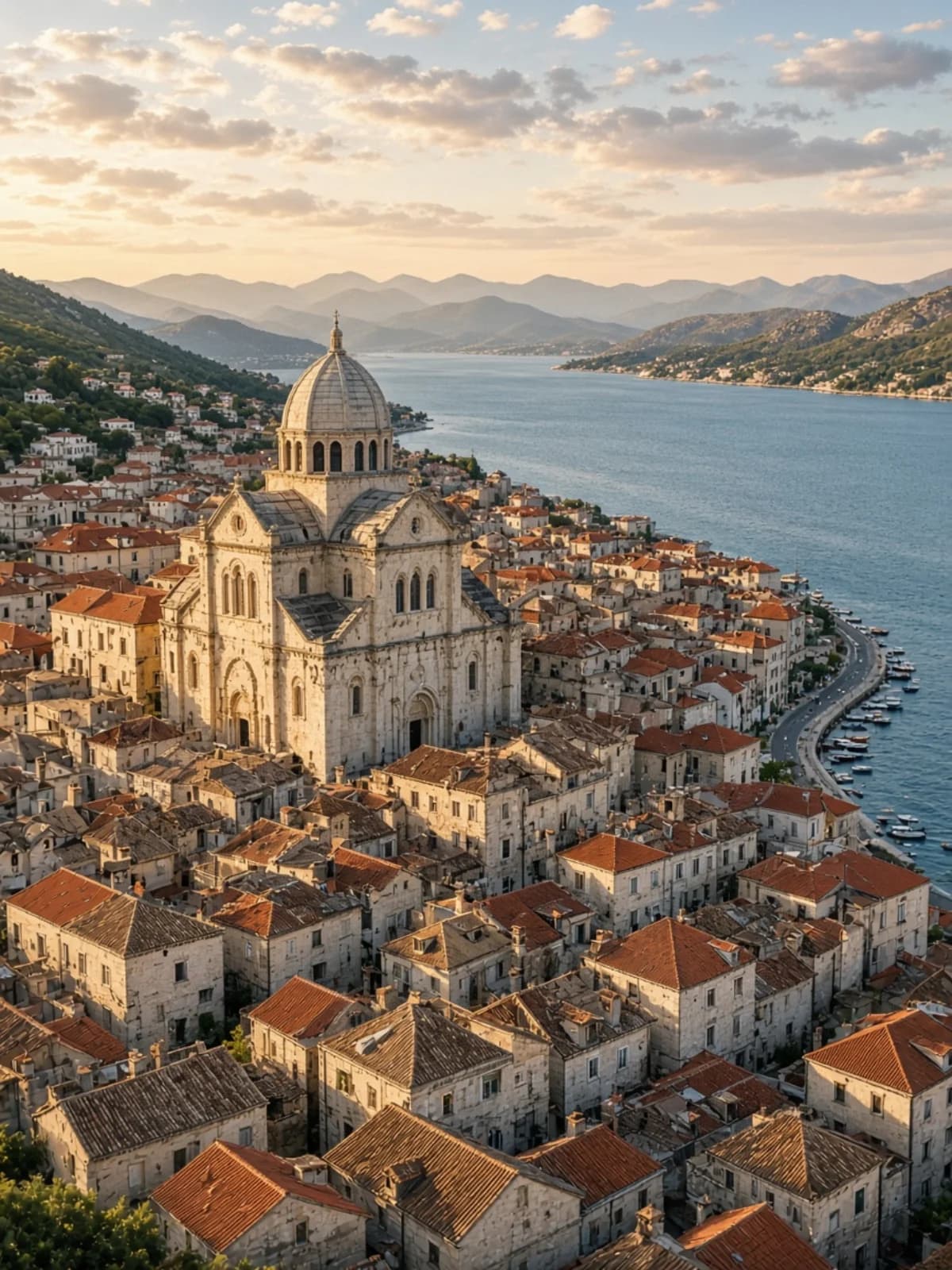
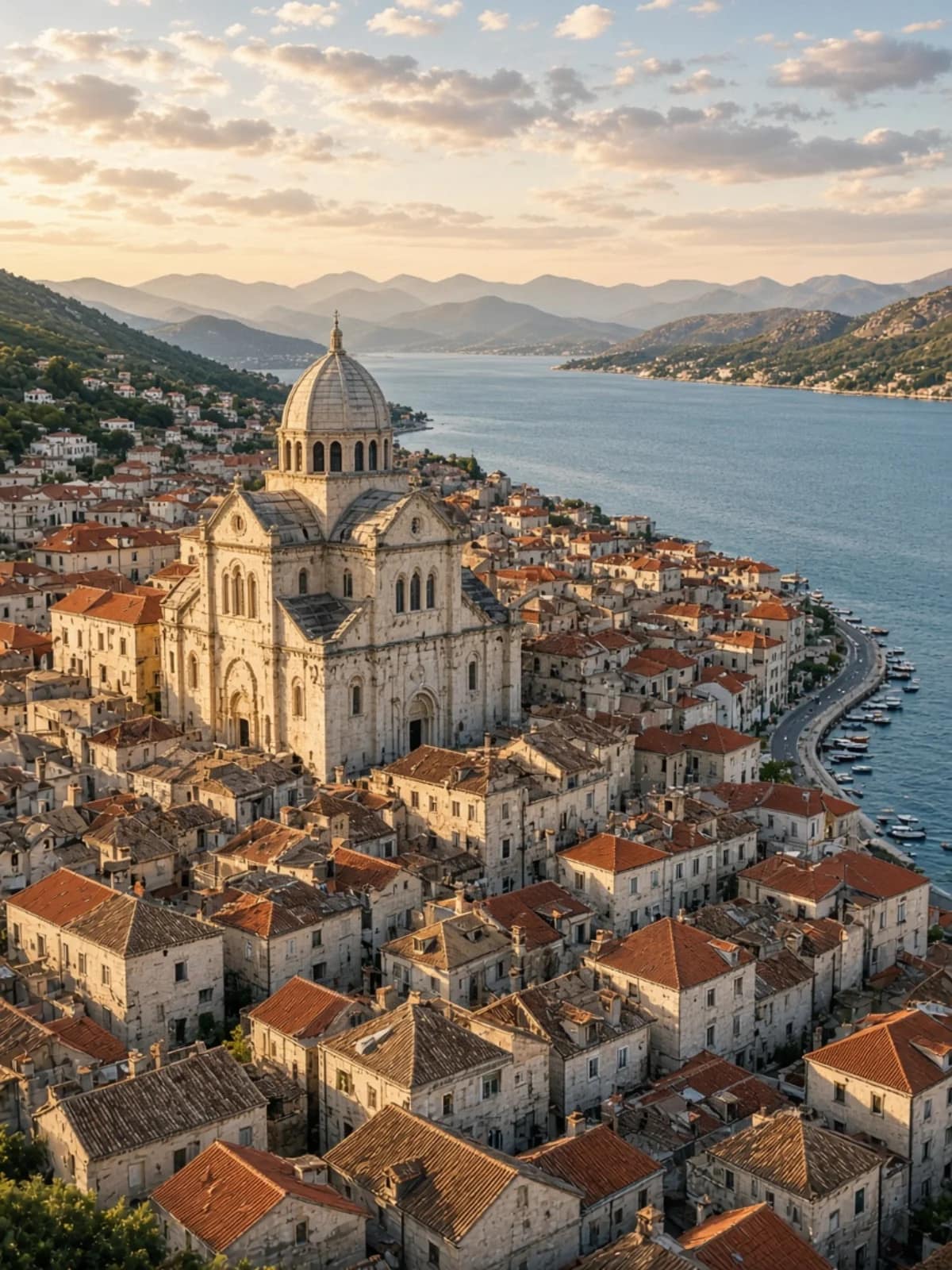
A day in the county can start in Šibenik, where the old town climbs from the harbour in narrow lanes of pale stone. The cathedral of St James is the anchor of the place, its stone lifted into a shape that still surprises visitors, and its carved faces look down over squares that fill slowly through the morning. Walk down towards the water and the town opens into a grid of waterfront cafés, fishing boats tied up in rows and the scent of grilled fish drifting along the quay. Head upriver to Skradin, a village at the edge of the national park, where the boats pull in beside ropes and nets, and the lanes are cool beneath vines. The walk into the Krka park is a slow one, with paths over wooden boards, the roar of falling water growing louder and the pools below turning from green to clear blue. Further down the coast, Vodice and Primošten offer a different rhythm: low houses, rocky swimming spots and a peninsula where the old village rises to a church above the sea.
What stays with you is the way the county keeps its pieces in conversation with each other. The fortress and the stone fields inland make sense of the sea beyond them, and the waterfalls make the coast feel less like an edge than a beginning. The islands and channels sit out past the harbours like a second region, reached by water and changing their colours with the hour. You leave the Krka with wet hair and a damp shirt, or you leave Šibenik with the cathedral still in your mind, and you find yourself planning the next visit before the first one is over. Few places in Croatia hold so many kinds of landscape so close together, and fewer still let you move between them without losing the thread. This is a county to return to slowly, staying long enough to see the same stone change colour in different light.
Monument
Monument
Monument
Monument