France
Paris sits at the heart of the Île-de-France region in France, and that is where a sailing week begins for many travellers, who arrive from elsewhere before stepping onto a boat. The region suggests a measured pace rather than a dramatic crossing, a setting that favours calm, steady sailing over bold ambition. Every journey starts with a choice of harbour, and the mood of the first morning on deck sets the tone for everything that follows.
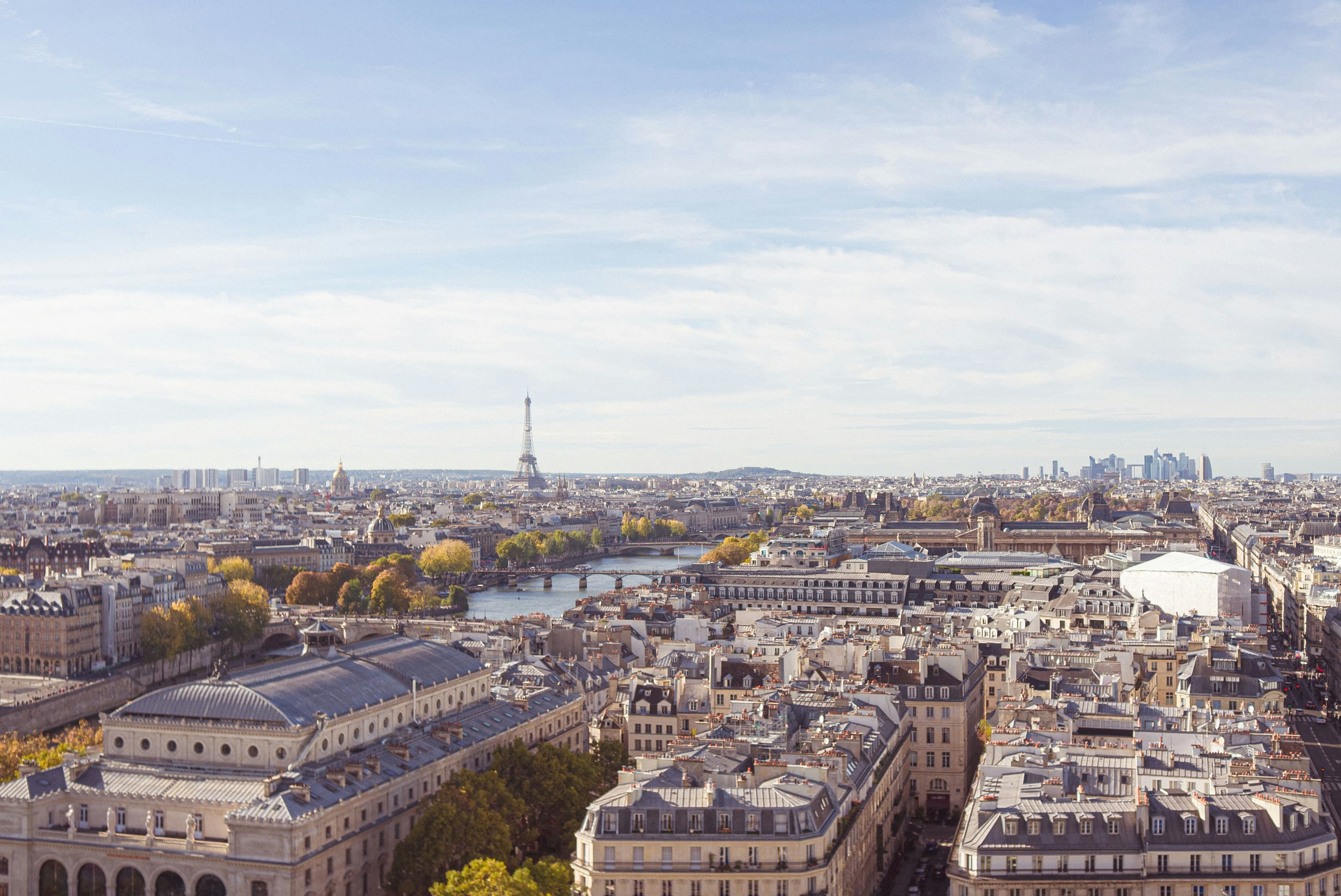
Discover ParisZinc roofs, wet limestone, and the flying buttresses of a cathedral leaning over the Seine as the lamps come on along the quays. Paris is a city that asks to be walked slowly, and it gives you the time.
Mornings begin with shutters rolling up over boulangeries, the smell of butter and bread drifting onto pavements still dark from the night's rain. The light is pale and even at first, then it climbs the cream-coloured façades of the great boulevards and turns them the colour of weak tea. Waiters set out chairs on the terraces, sweep the crumbs from marble tables, and sit their customers facing the street, because in Paris the street is the entertainment. By afternoon the parks fill: people lie on the lawns of the Luxembourg Gardens, children sail boats across the basin, and old men play chess beneath the chestnut trees. Evening is the best hour. The stone holds the last of the sun, then goes blue, then the bridges light up one by one and the river takes the reflections and carries them away toward the sea.
The city's bones are in its islands and quarters. The Île de la Cité is where Paris began, a small ship of land moored in the river, and from its western tip you can see the spires of the cathedral and the gothic glass of the Sainte-Chapelle, where the light comes through in colours that seem to have been poured rather than painted. Across the water, the Left Bank's quays run for long stretches lined with green bookstalls, the bouquinistes, who have been selling old prints and paperbacks from their metal boxes for centuries. North of the centre, the Marais keeps its medieval lanes and the arcaded square of the Place des Vosges, where the brick and stone are so evenly proportioned that the eye rests there without effort. Climb the steep stairs of Montmartre and the city opens below you in a grey-and-cream sweep, the domes and towers rising through the haze. Further east, the Canal Saint-Martin slips under low footbridges and past cafés where locals drink on the towpath, a quieter Paris that most visitors never think to find.
What makes this city endure in the mind is the sense that everyday life and its monuments have never been separated. The Seine is not a view but a working street, with barges moving slowly under the bridges and joggers and lovers sharing the same stone steps. Every neighbourhood has its own bakery, its own wine shop, its own corner where the old men argue about football. You leave Paris reluctantly, and you find yourself wanting to come back to the same café, the same bench above the river, the same hour when the stone turns gold and then grey and then, quite suddenly, lit.
Petit Palais
Museum
Grand Palais
Museum
1 min on foot
Palais de la Découverte
Museum
1 min on foot
Place de la Concorde
Landmark
8 min on foot
Orangerie Museum
Museum
3 min on foot
Tuileries Garden
Landmark
3 min on foot
Orsay Museum
Museum
5 min on foot
Museum of Decorative Arts
Museum
8 min on foot
Averages 2016-2025
5°
Jan
6°
Feb
8°
Mar
11°
Apr
15°
May
19°
Jun
21°
Jul
20°
Aug
17°
Sep
13°
Oct
8°
Nov
6°
Dec
Jun – Aug
20°
Dec – Feb
5°