Garagnin-Fanfogna Palace
Monument
Stayinto · Administrative region
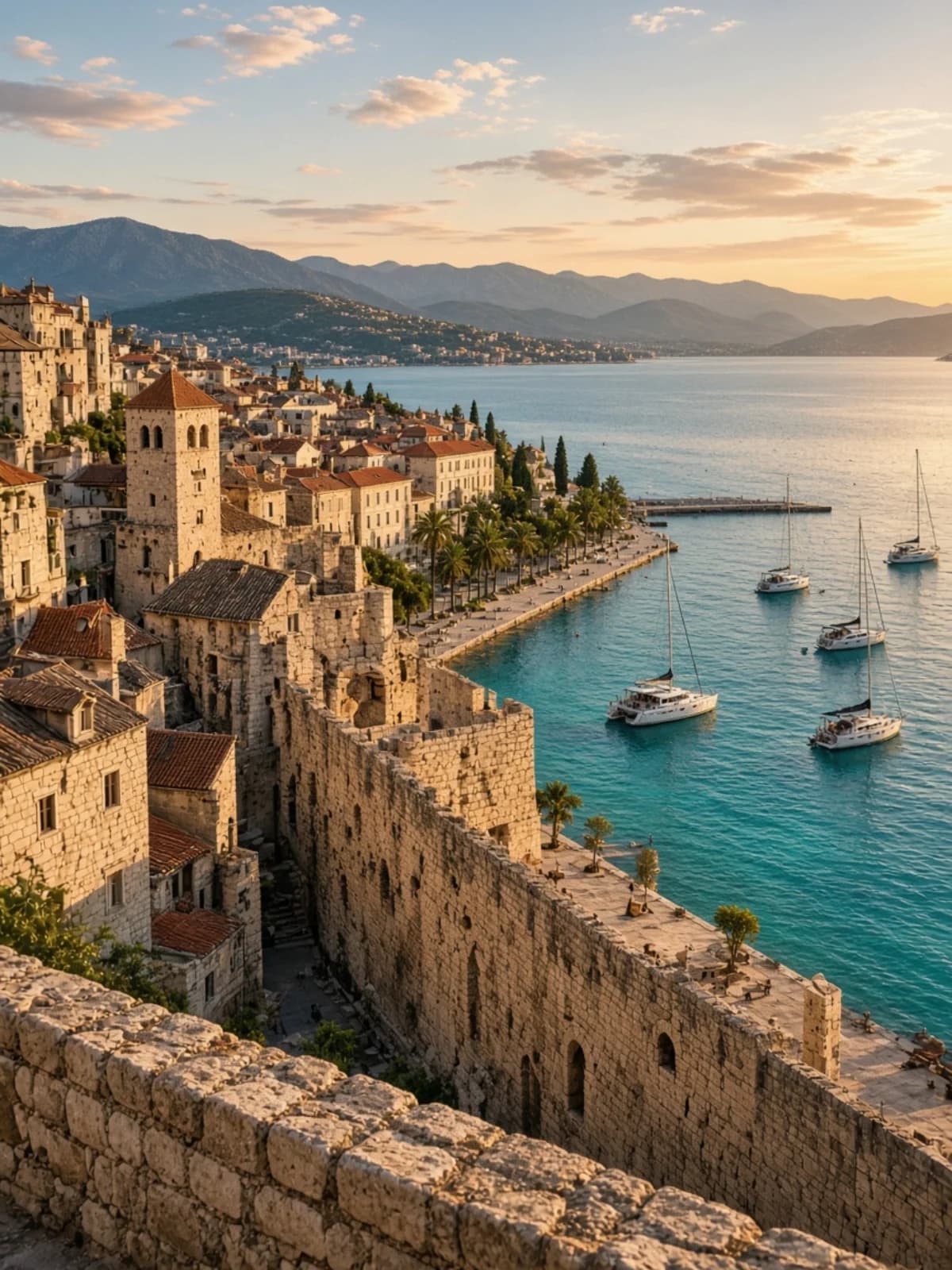
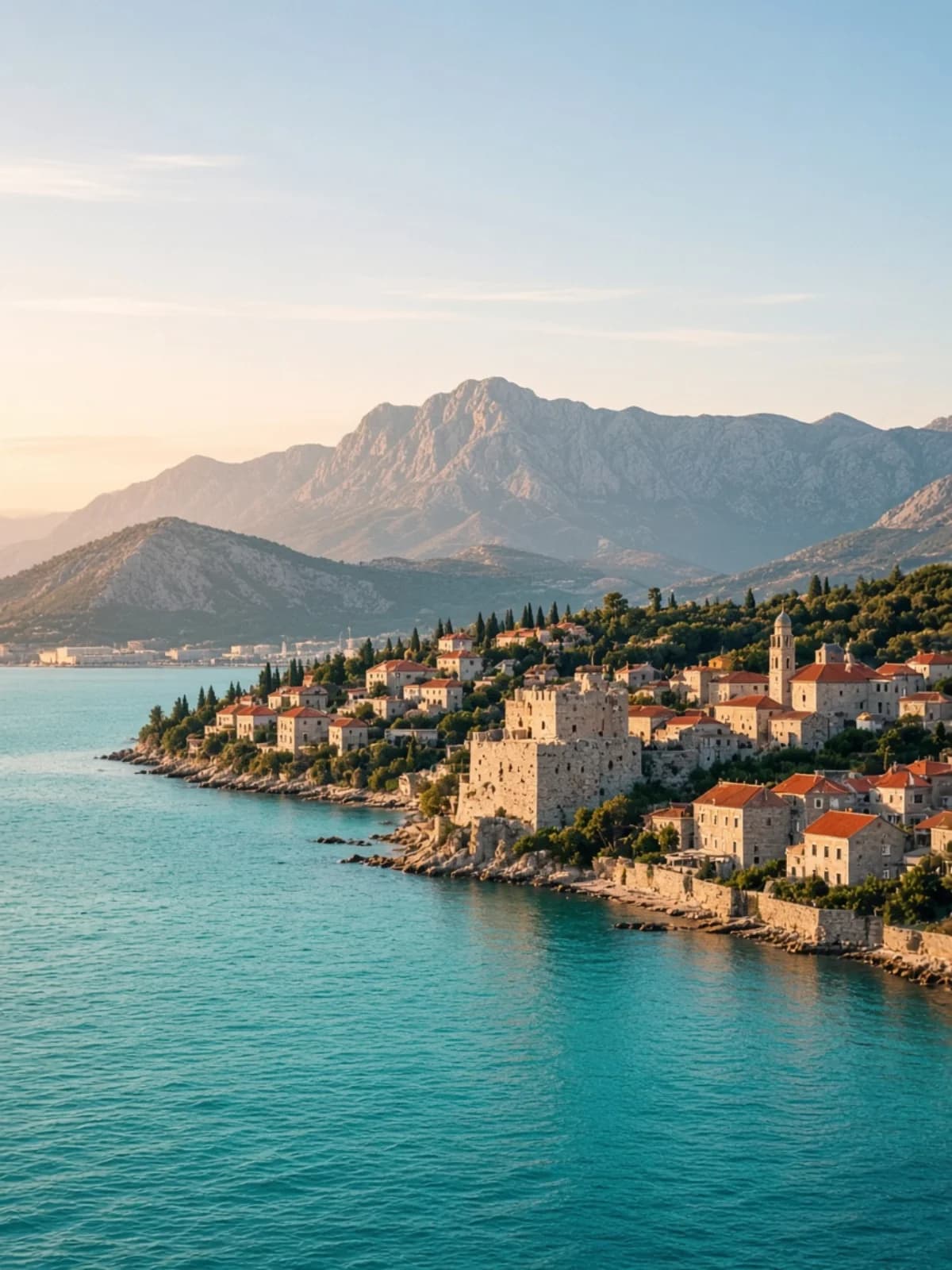
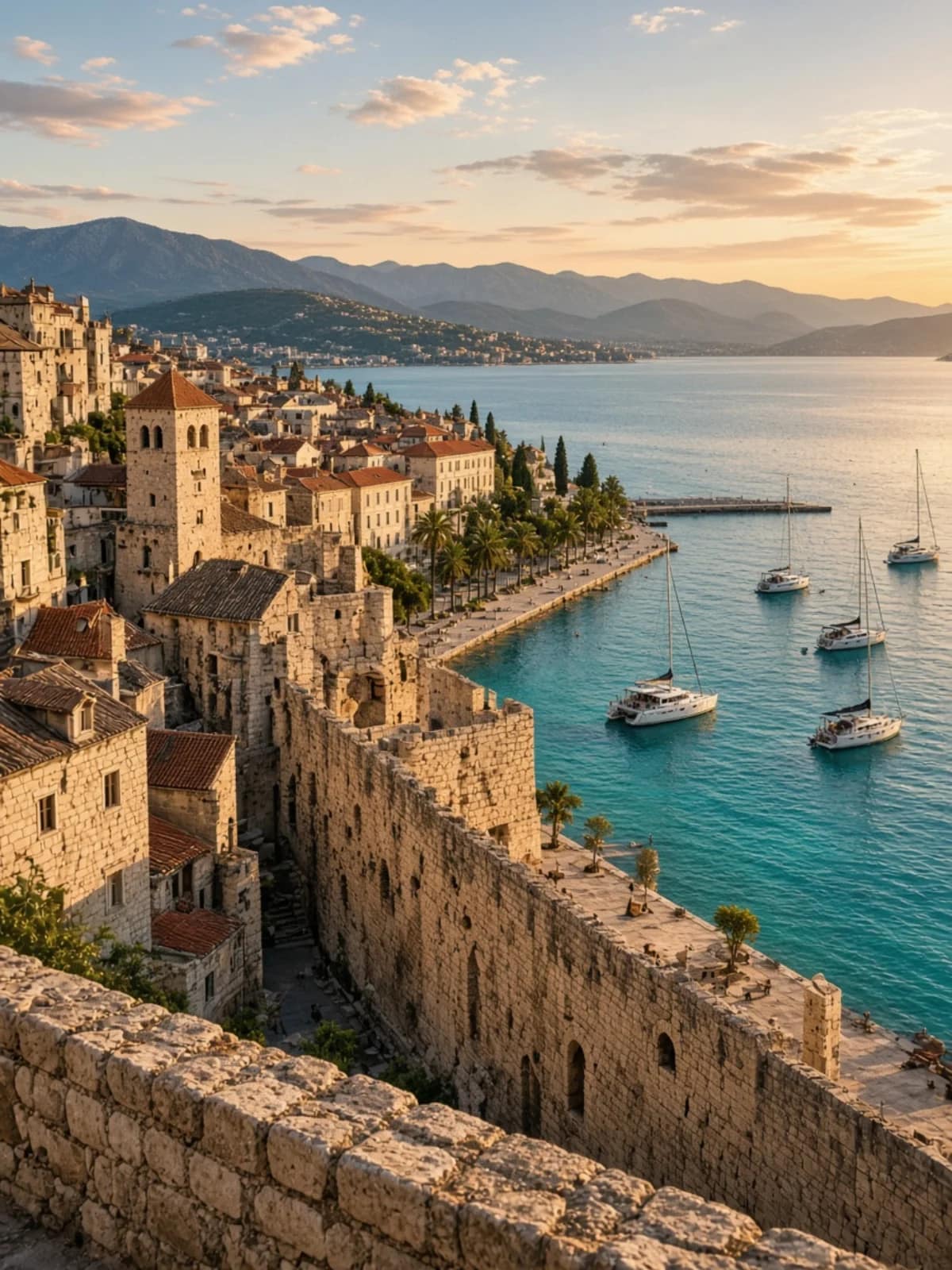
Late light lies flat across the pale stone of Diocletian's Palace, warming the Roman walls while the harbour below fills with masts. Split-Dalmatia is built on that kind of contrast, with karst mountains rising straight out of a sea that stays clear enough to show the seabed.
The region changes with every few kilometres of road, though the limestone is the constant. Inland, the Zagora hills are dry and open, with stone walls running over bare slopes and villages that seem to have been set down and forgotten. Sinj keeps its cavalry tradition in a town that feels more like a market than a museum. Further north, the Cetina cuts a green gorge through the rock, and the water is loud and cold. Along the coast, the character shifts again. Split is dense, busy and lived-in, a port city where ferry queues, school groups and grandmothers with shopping share the same narrow lanes. Trogir, by contrast, is compact and calm, a walled town on its own small island, where the cathedral portal carved by Radovan draws visitors into quiet corners. Makarska's riviera is more relaxed, with pebble beaches, pine shade and the great grey bulk of Biokovo behind it. Out at sea, Brač is known for its white stone, quarried for buildings far beyond the region, while Hvar has terraces of lavender and a town square that stays busy late into the evening. Vis feels more withdrawn, a place that was closed to outsiders for decades and still moves at its own pace.
A good day here tends to start early in Split, when the old palace courtyards are empty and the cathedral bell is the only sound. Walk the seafront, then take a boat across to Brač or head south along the coast road towards Omiš, where the river meets the sea between steep cliffs and the old pirate town climbs the hillside. By afternoon, the air smells of pine resin and hot stone. Lunch might be grilled fish eaten at a plain table with the sea a few steps away, followed by a slow walk through the lanes of Trogir as the stone cools. Klis fortress, carved into the hills above Split, offers the view that makes the whole region make sense: the city, the harbour, the islands strung out on blue water and the mountains rising behind everything. Nothing about the day is staged. It is simply a sequence of places that each carry their own weight.
What stays with you is the way the region keeps its inland and coastal selves close together. You can drive from a stone-walled hill village to a harbour café within an hour, and the difference in pace, sound and smell is part of the pleasure. Leaving feels like setting down a weight you did not know you were carrying. Most people who come here find themselves planning the return before they have finished the first visit, already thinking of which island they missed and which road they did not take, and wondering how long it would take to know this coast properly.
Monument
Monument
Monument
Monument
Monument